The first day of school is always a day when many hearts beat a little faster, the teachers’, the
parents’, and the children’s alike. A classroom, to me, has always felt like a place where
many worlds meet; flavours from faraway kitchens coming together to form a dish no one has
tasted before. In this vibrant stew of mingling, diversity simmers and slowly transforms into
something wholly new.
A classroom is a true melting pot, not just of children, but of the stories and rhythms they
carry from their homes. Every child walks in with the invisible basket of their family’s ways;
their habits, beliefs, and values. For the teacher, and for the children themselves, this mixing
of worlds can feel jarring at first. Even more so in the early years, where a child’s home is not
just a place but their entire universe. They know no other soil, no other breath.
So how do we help them create a new home, a shared one, held within the walls of our
classroom? How do we guide them to gently lay down a little of what they brought and pick
up a little of what others offer? The truth is … it isn’t simple at all. It is slow work. Tender
work. Work done with listening, with presence, and with steady warmth.
The work of an early years teacher is not merely to settle children into a timetable. It is to
help their souls find a resting place in a new landscape. It is to gently introduce them to new
adults, new peers, new ways of being, until these too feel familiar. In all of this, what matters
most is the quiet imprint the teacher leaves on their hearts, the soft pause she creates for them
so they may grow.
My years teaching the early childhood classroom were my most peaceful. Although the outer
chatter of little ones filled the air, beneath the noise lay a deep, steady calm. Our days
unfolded like small islands strung together on a ribbon. And the island that always gathered
them inward, that brought their breathing deep and soft, and the one that created shared space
was our story time at the end of the day.
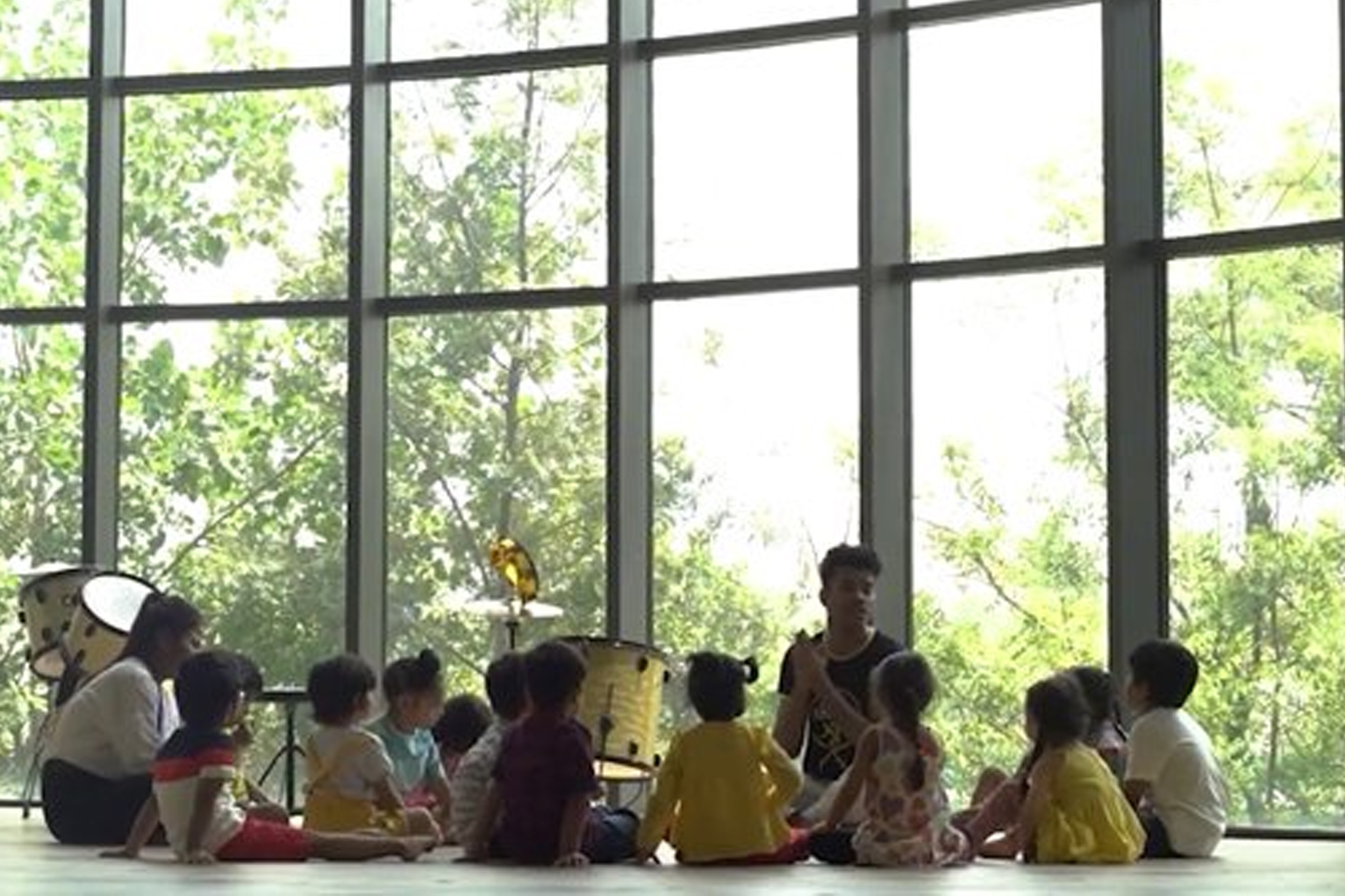
With three rhythmic beats of the wooden rattle, we invited ourselves into a shared narrative.
Some children tiptoed in, others rushed with shining eyes and arms full of cushions, and all of
them found their place around me and the tale waiting to unfold.
I chose stories not for entertainment, but for healing. In those first weeks, when their inner
seas felt anxious and uncertain, we listened to tales from nature. We heard stories of the Little
Cloud who drifted bravely away from the Mother River, travelled up with wind, played with
other clouds, helped fields of corn, only to find his way back home again… again to Mother
River. Or the small girl with the red boat who visited magical islands, sliding, building
castles, feasting but always, and always returning home. Wherever our stories travelled, they
always circled back. Just as these children would at the end of each school day, into the arms
of the familiar. These stories worked magic even on the ones who clung tightly to home.
Even the ones who sat a little distance away, with their hearts tucked behind quiet eyes, heard
something. Their small bodies relaxed, their heads tilted and their breath smoothened.
These little ones never ceased to amaze me. How their tender but wise inner selves
understood the message long before their words could express it. It often left me wondering:
is the story the healer, or is it the listening heart of the three-year-old that transforms it into
medicine?
Once during story time, we met a little gnome whose hands were quick to pluck at plants,
pull away gems and push another gnome aside. His hands had grown hard and rough. Then
came a fairy, gentle as a stream. She washed his hands with water, patience, love and care.
Slowly, we saw that the tale had touched ‘the little gnome’ in our homeroom. His hands
changed their way. The toys stayed on the shelves, the books remained in their places, and a
new softness began to enter his gestures. The story worked like a quiet touch of warmth.
Another child who was bright, quick, already filled with numbers and letters long before the
others, was met by a different story. It was of a boy who wandered far to find ‘a red house
with no windows and a star hidden inside’. Across fields and hills he went with nothing to
solve the riddle, until he rested beneath an apple tree and found the star by simply cutting
open the fruit he held. As I told the story and cut an apple through its belly before the
children, I watched curiosity rise like dawn in the child’s eyes. After that day, he began to
wonder aloud, to look beneath things, to ask questions that stretched beyond what he already
knew. A small star had been found inside him too.
We also had a loud but lonely elephant visit our story time. He was big in heart and big in
voice. He so wished for friendship but frightened the little creatures with his booming ways.
As the tale unfolded and repeated through the week, some children learned the art of
softening, and others learned the art of welcoming. In the coming weeks, I saw them turn
towards one another . . . some more gentle, some more open. And the circle felt just a little
wider than before.
Brick by brick, story by story, we created our own home, with our ‘own little ways’ of living
and being.